
Meet Audie

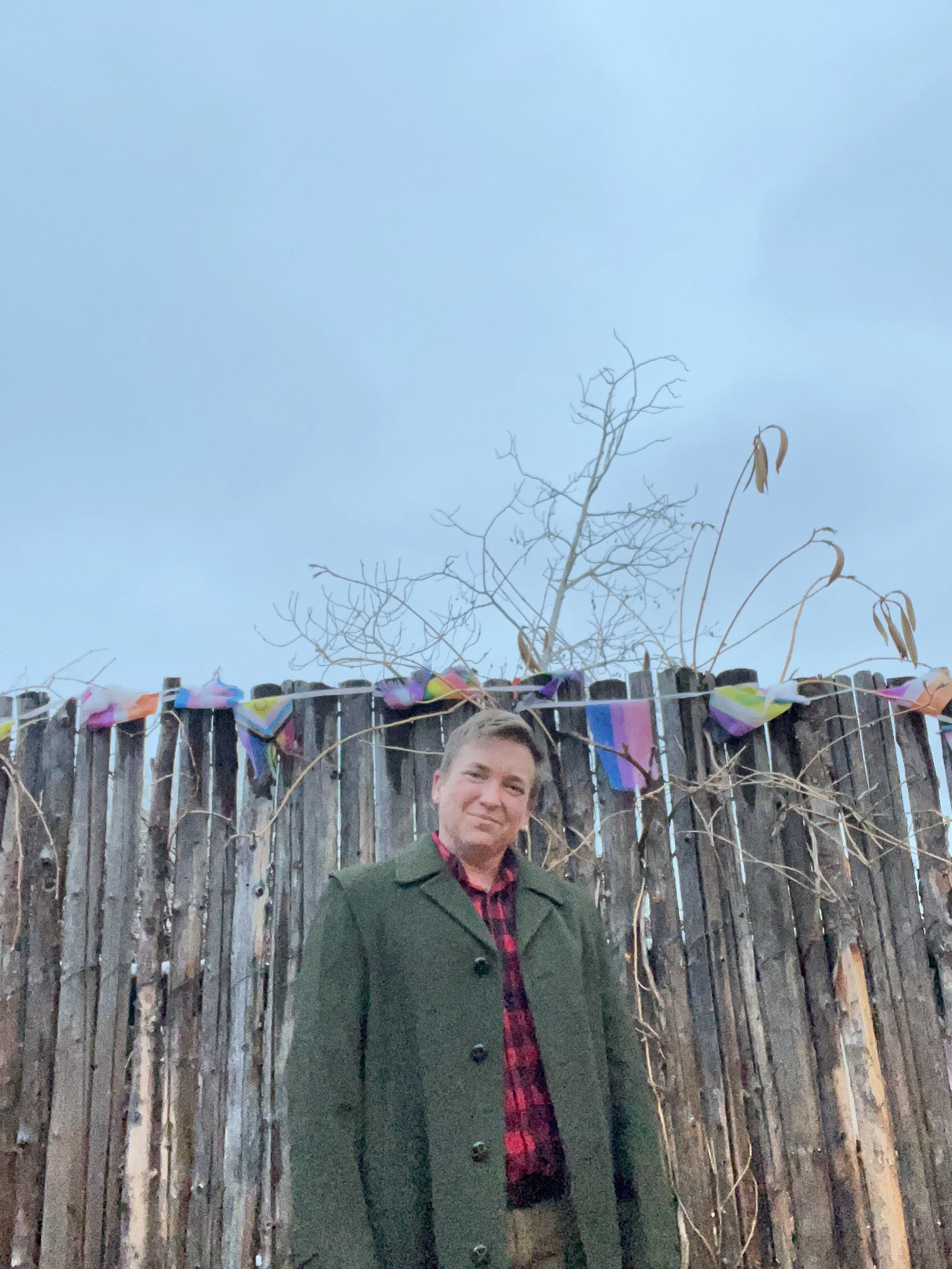
Audacity Nadler is a transgender anarchist with three children, two dogs, and over 20 years of experience in education, program development, evaluation, and supporting resilient human development from a systems perspective. They have an unwavering devotion to taking photos of sunsets. Someone really cool once said Audie's superhero name would be The Best Practice.
"I don't just evaluate Programs...I tell the truth."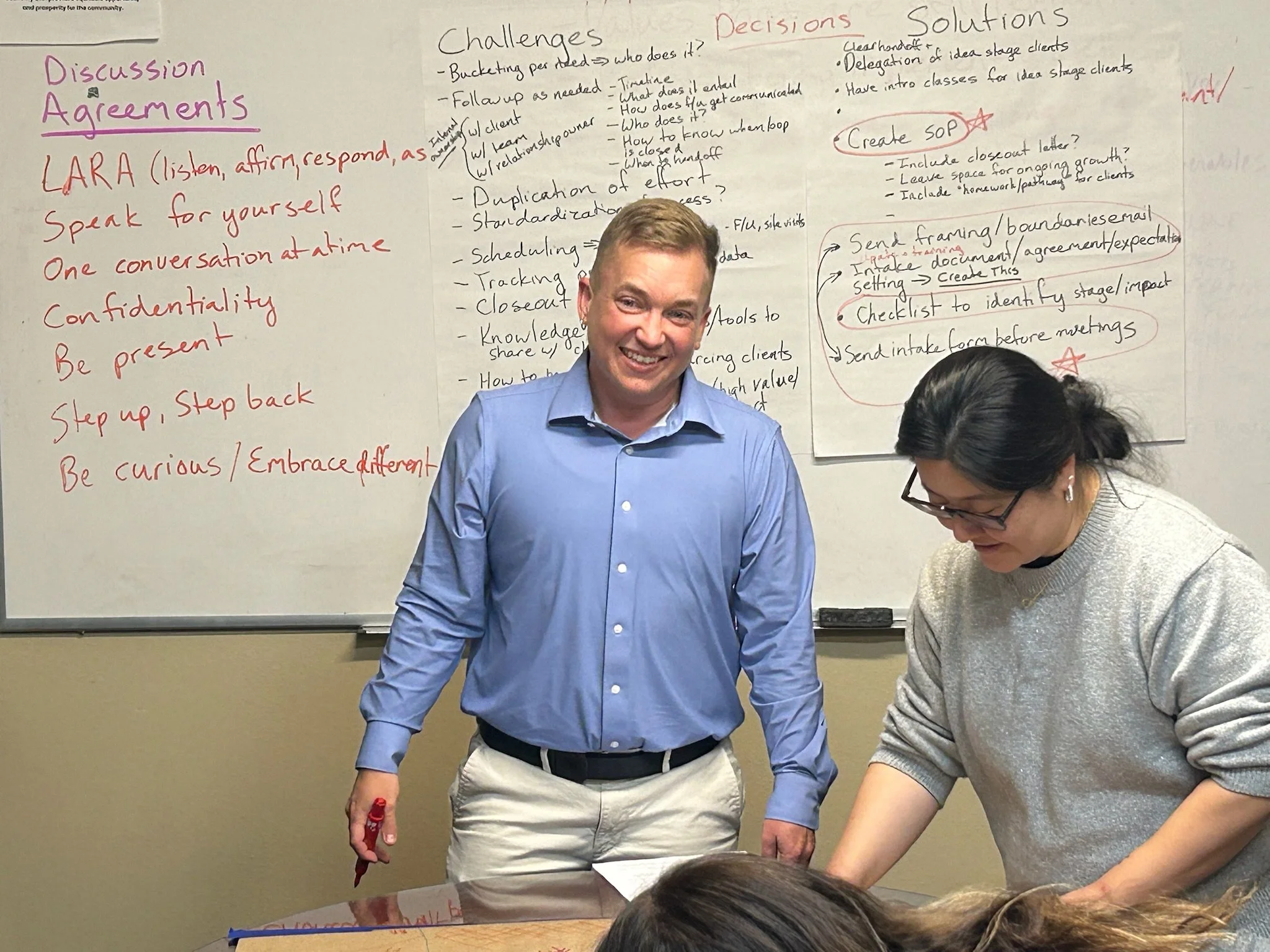
Audie Nadler is the founder and lead evaluator of Authentic Evaluation. They specialize in creative, culturally responsive approaches that honor community voice and generate meaningful insights. With experience across nonprofits, public health agencies, community-based organizations, and philanthropic foundations, Audie brings a grounded, relational style to evaluation, one that prioritizes people, lived experience, and trust.
Based in Santa Fe, New Mexico, Audie partners with organizations locally and nationally to design evaluations that reflect community voice, lived experience, and values.
At the core of their work is a simple belief: Evaluation should support your mission, not burden it.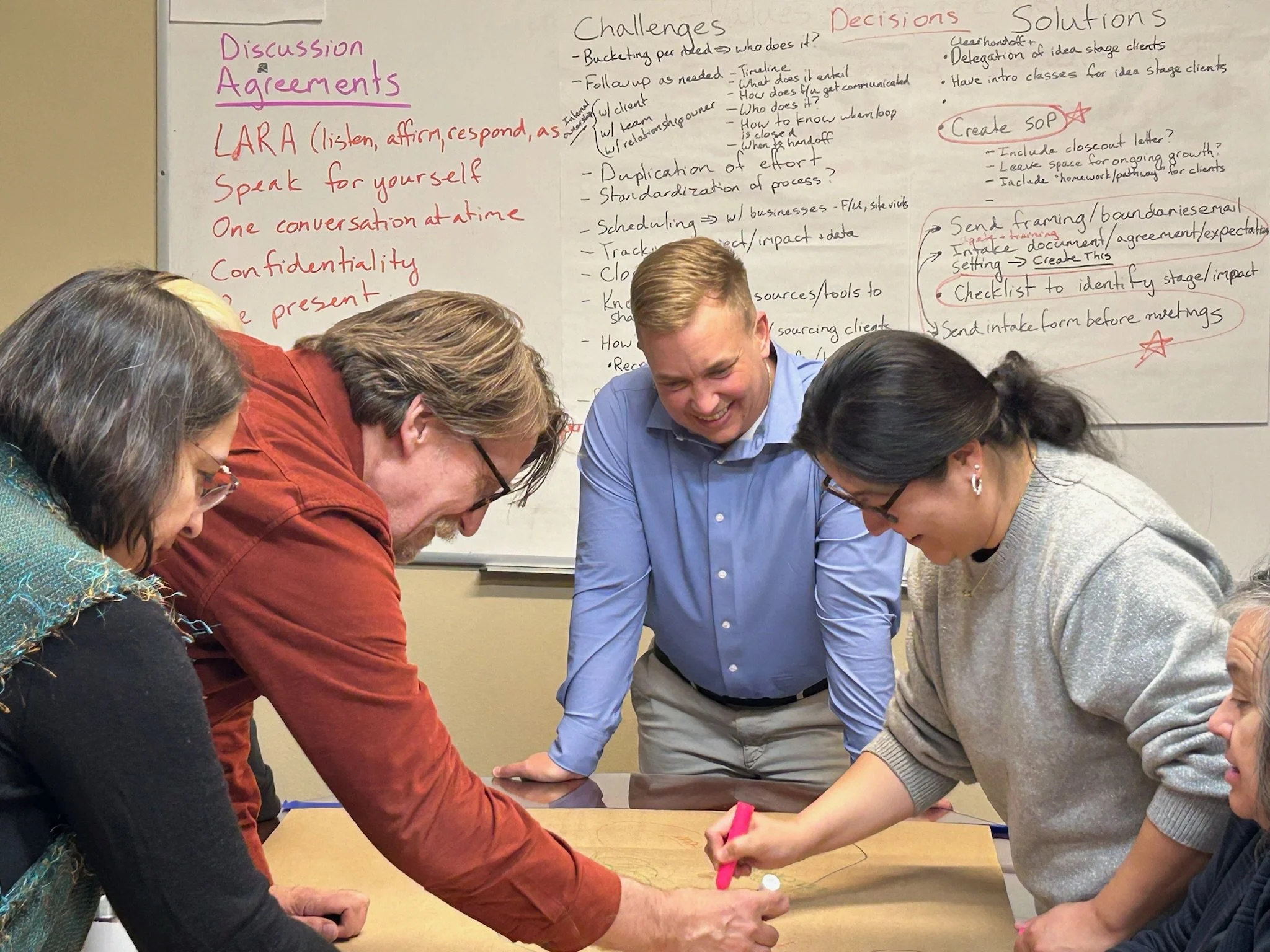

What It’s Like to Work with Audie
-
The Injury and Behavioral Epidemiology Bureau of the NM Department of Health contracted with Dr. Nadler to lead a needs assessment and planning process for a county-wide sexual violence prevention project. Dr Nadler brought together all of the major players in the county for collaborative planning. They convened representatives from county government, the school system, the main employer, and historically marginalized groups. With the input from this convening Dr Adler produced a comprehensive program and evaluation plan. The plan included concrete short and long-term goals and planned evaluation components using already-available data in full alignment with the Bureau's existing sexual violence prevention framework. Through this project Dr Adler ably demonstrated their ability to convene and lead a planning process resulting in meaningful contributions to Public Health program planning and assessment.
-
Audie made a difference in the interpersonal dynamics among our team members and introduced skills and habits that we adopted right away. Their gentle, straightforward approach helped us open up and get right into the work. We continue to revisit the tools that they trained us on as we strive to improve how our team members collaborate. One of the most important things I learned from them was to continually see and value people over deadlines or products. Thank you, Audie!
-
Audie has a unique - and much-needed - point of view about the intersection of personal identity and evaluation practice. They are able to blend optimism with practicality, theory with practice. Their guidance comes from deep knowledge and personal experience; it's clear that this work really matters. One of my colleagues attended Audie's session at the 2024 American Evaluation Association conference, and said it was one of the most useful sessions he's attended. Our team was so impressed with Audie that we invited them to join us for a full-day training on Authentic Evaluation for our 15 person team. The session offered a deeply human approach to the evaluation profession, with mindsets and strategies we could use as individuals and as a team to be a more authentic, inclusive, and emotionally safe workplace.
The Story Behind Authentic Evaluation
Authentic Evaluation was created from a refusal to separate values from practice.
Audie’s work is grounded in the belief that evaluation is never neutral. Every tool, question, and framework reflects assumptions about whose voices matter and which outcomes count as success. Too often, evaluation prioritizes compliance over truth, producing data that erases context and disconnects organizations from the realities of the people they serve.
Shaped by a lineage of radical empathy paired with action, Audie approaches evaluation as both a responsibility and an opportunity. Inspired by figures like Casper ten Boom, Rosa Parks, Dorothy Day, and Harriet Tubman, this work is rooted in the discipline of grounding decisions in values, especially when doing so is difficult.
Authentic Evaluation exists at the intersection of statistics and social justice. Through arts-based and culturally responsive methods, evaluation becomes a way to tell the truth about programs, the people they affect, and the systems they operate within. This approach creates data that is more accurate, more humane, and far more useful for learning, accountability, and change.
Professional Background and Expertise
Audie’s professional experience is grounded in real-world practice, community partnership, and systems-level thinking. Their work is shaped by years of experience in:
Public health evaluation
Nonprofit program assessment
Community-based research
Facilitation with diverse and multicultural groups
Implementation of creative and arts-based evaluation methods
Designing data systems that are practical and sustainable
They are trained in culturally responsive evaluation practices, qualitative and participatory methods, arts-based data collection, and communication strategies that make data easy to understand. Their strengths include deep listening, perspective-taking, and translating complex information into clear, actionable insights.
Audie’s background allows them to bridge the gap between what programs hope to achieve and what evaluation needs to measure, resulting in processes that function well in real-world settings.
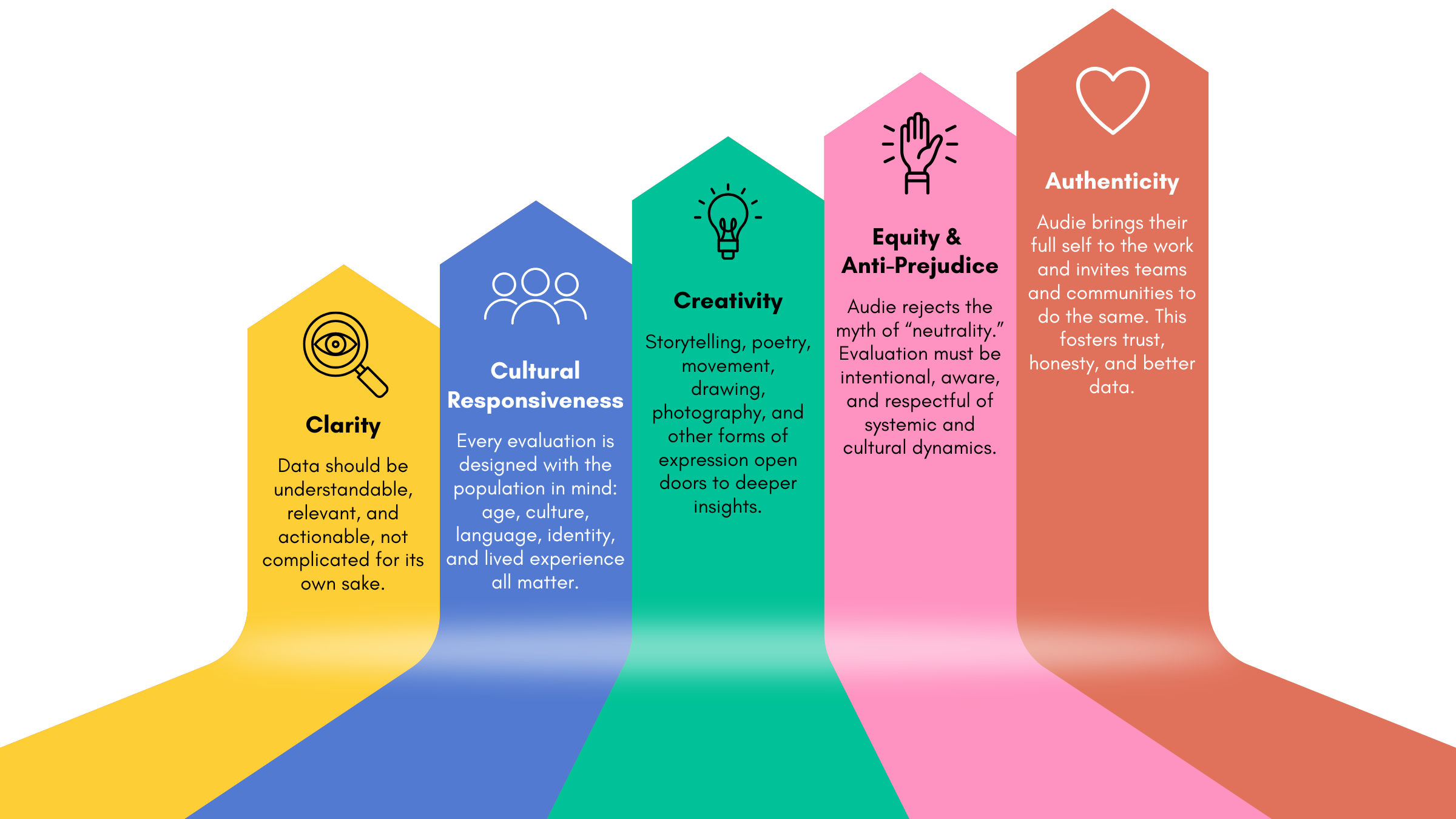
What Guides Their Work
If you’re looking for evaluation that reflects your community, strengthens your mission, and creates meaningful insight, we’d love to talk.
Ready to connect?